[email protected]

Archive for March, 2009

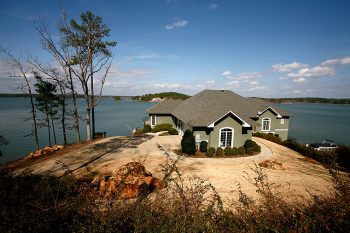
Calling All Tigers – ex Auburn Coach Tommy Tuberville’s Lake Martin Home For Sale

lake martin home sale tuberville tommy auburn

Why not buy tommy tuberville's lake martin home?

Former Auburn football coach Tommy Tuberville is selling his waterfront Lake Martin home for $2.375 million.

Whether he resigned or was asked to resign, it really doesn’t matter.

In a sign of the times, I learned about this sale not from the newspaper, not from the radio, not even from the grapevine.  I read it on a blog post from a blog that covers SEC sports. I am not the listing agent.  My friend Toni Adcock is.  She graciously allowed me to write about her listing. (but I expect a repay, Toni! Ha!)

The home is located in the Marina Marin development on Lake Martin.  Its address is 656 Marin Parkway.  It is located off of highway 50, near Martin Dam and Chimney Rock.  Incidentally, Marina Marin was originally developed by deposed HealthSouth exec Richard Scrushy.  Not that it is at all related to Tuberville’s home.  I just throw that out there FYI.

The details:

According to the listing agent, it is priced at $2,375,000, the home as 4 bedrooms, 4 bathrooms, and 2 half baths.  It is 5,859 square feet and site on 2.89 acres in Marina Marin.  It is a point lot, with a whopping 730 +/- feet of waterfront.  As you can imagine, it has about every upgrade known to man, both inside and outside.

Toni is having an open house for Realtors next week, and I plan to be in attendance.  I will post pictures and video of that if it is OK with her.

Come to think of it, Coach Tubs is supposed to be a pretty good cook.  I wonder if he will be frying up some catfish for the attendees?

As a member of the Lake Martin MLS, of course I can help any buyer that is interested in this (or any other) Lake Martin home. So if you are interested, please let me help you.  Just call or email me at the info at the top of this page, or fill out this contact form.

UPDATE: Click here for the video home tour of The Coach’s home on Lake Martin.

Share this:
Share this page via Email Share this page via Stumble Upon Share this page via Digg this Share this page via Facebook Share this page via Twitter

Tags: , , , , , , ,

Please Ignore That I Was Interviewed For Lake Martin Magazine

lake martin magazineI was honored to be interviewed in the March 09 issue of Lake Magazine, Lake Martin edition. The topic was the outlook for the Lake Martin real estate market for the rest of 2009.  It was a really good article, Kenneth Boone did a great job of getting lots of different perspectives.  I recommend it.

Normally when I have been quoted or linked elsewhere, I would put excerpts here and talk mostly about what I said or my reactions to the other peoples’ opinions.  I’ll be honest, it’s not exactly bad publicity, and there is still a tiny ego boost in seeing ones’ name in print.

Not this time.

As I was flipping through the rest of the issue, I realized that there is a much more important article in it.

Holly Grisamore wrote this month’s My Lake Martin column.  She wrote a very personal account of why they love Lake Martin so much, and why their lake home has become such a central part of their family’s life now.

That’s more important to me because I was the agent that assisted them in buying the home.  That’s what it’s all about.  I am not taking credit, though. I didn’t make Lake.  I didn’t give them the wherewithal or the desire to buy.

It’s not about me.  It’s about their love for the lake, and their desire to create a place for their family to always remember, a place that is really more home than the different “town” houses a family might occupy over the years.

Again, I am not trying to take credit.  Far from it. I think what I did right with the Grisamores, and try to replicate with all buyers, is to be a good assistant – an able, knowledgeable, hard working local guide.  I try to get to know them, their wants and needs, then pursue them doggedly, and then get out of the way.

If you read almost any “How To Get Rich Selling Real Estate” book or attend some rah-rah glamor shot seminar, the “experts” will almost without fail tell you to go about finding your “target buyer.” You are supposed to order them up like George Jetson does a meal – enter in age range, net worth, urgency to buy and – presto – here’s your target demographic that you should then “farm” for leads.  Maybe that works somewhere for some people.  Not me.

I am looking for buyers that hope to see their kids get engaged on that dock, or remember how it feels to truly relax by the water, or want to know how free you feel when you ski for the first time.  People that know the meaning of non-pecuinary benefits even if they’ve never heard an economist define it.

The Grisamores typify my “target demographic.”

Does anybody out there own a database of people like that?

Share this:
Share this page via Email Share this page via Stumble Upon Share this page via Digg this Share this page via Facebook Share this page via Twitter

Tags: , , ,

Anatomy Of The Perfect Lake Martin Flip

This is the story of Bryan and Allison Jones, who defied the odds of a slow real estate market and sold their Lake Martin waterfront home in 34 days in 2008.

Plus – it was a flip. We have so many spec homes on the Lake Martin market right now and back then.  We also have some foreclosures and bank REO as fallout  – they had to compete against them all.  They excelled.

But how??claw foot tub

1. Great design – their home escaped the noise of a crowded market in Lake Martin because of great design.  Call it unfair, but they had two advantages.  Bryan is an architect at JonesPierce Architects in Atlanta.  Allison is an interior designer with Insight Design Interiors Inc.  They improved on the home structurally by keeping the lake the focus, and topped it off with interior colors and features that Lake Martin buyers want like a claw foot tub in the master bath (not usually seen at that price level).

2. They didn’t overbuild – even though they have the chops to build anything they want, Bryan and Allison wisely realized that in order to sell, they shouldn’t create a seven bedroom home when most in their neighborhood had three.  Their restraint also kept the home in the meat of the bell curve of the Lake Martin market.

605 lakeview3. They focused on the selling points - get ready for a brilliant observation: people buy homes at Lake Martin for the lake.  The Jones opened up the home with big windows and doors in the great room, and bay windows there and in the master bedroom.  They also added a huge screened in porch that takes in the breeze on three sides while overlooking the water through the cool forest of some Alabama Power timber land.

Bryan and Allison’s methods can and should be duplicated by any waterfront sellers on Lake Martin.  If you have been trying to sell your home for a while, ask yourself:

1.  Do I have a good design for my lake home?
2. Am I overbuilt for my area?
3.  Do I highlight the selling points of my home?

If you need help answering these questions, call me at the number at the top of the page, or contact me here.
when there were no frogs

Share this:
Share this page via Email Share this page via Stumble Upon Share this page via Digg this Share this page via Facebook Share this page via Twitter

Tags: , , ,

FEMA Speaks To Lake Martin Realtors About Flood Insurance Changes

Recently many Lake Martin area homeowners are getting letters from their lenders demanding flood insurance.  A little research revealed that FEMA has redrawn the flood maps and therefore many properties are now included in different zones that lenders feel require flood insurance.

This is puzzling to many, since Lake Martin has been around since the late 1920s, and FEMA is just now making this determination.  It is also confusing to me personally that a home that sits five feet above the top of Martin Dam would be considered at risk.  If there is five feet of flood waters pouring over the top of Martin Dam, the dam would wash away and suddenly there would be a 90 foot drop in the water.

If you are looking for common sense answers to the above questions, this post is not the answer.  Below I have copied over a handout that was written up by FEMA for the meeting and presentation they did to the Lake Martin Area Association of Realtors.  I was there.  They read these answers out and I guess it was helpful.  Later on I will post my thoughts, and a little more boiled down, practical guide of what to do if you get a demand for flood insurance from your lender.

If you have any questions on this, feel free to contact the two people listed at the bottom, one is from FEMA, the other fom the State of Alabama.

They opened the meeting by saying that they would not be debating FEMA policy and procedures and they were not here to comment specifically about Lake Martin.  I wondered, then why are you here?  At any rate, here is their handout:

***************************************

HANDOUT FROM FEMA:

FAQ Hand Out

Date: February 18, 2009

Presenters: Janice Mitchell, Federal Emergency Management Agency (FEMA), Region 4, Insurance Program Specialist

James K. Meredith, NFIP State Coordinator, ADECA

Subject: NFIP and Flood Insurance Requirements

Audience: Realtors, Home owners, Lake Martin Recreational Association, Lake Martin Home Owners & Boat Owners Association, Alabama Power Company personnel, Office of Water Resources personnel

Background

The U. S. Congress established the (National Flood Insurance Program (NFIP) on August 1, 1968, with the passage of the National Flood Insurance Act of 1968. This Act enables property owners or renters in participating communities to purchase insurance protection against losses from flooding.

Participation in the NFIP is voluntary. It is based on an agreement between local communities and the Federal Government that states if a community will adopt and enforce a floodplain management ordinance to reduce future flood risks to new construction in Special Flood Hazard Areas (SFHA), the Federal Government will make flood insurance available within the community. FEMA identifies the SFHA on the Flood Hazard Boundary Map (FHBM) or the Flood Insurance Rate Map (FIRM) as determined by the hydrologic and hydraulic studies developed for the flooding sources within that community.

The NFIP was broadened and modified with the passage of the Flood Disaster Protection Act of 1973 and other legislative measures. This act established the Mandatory Purchase Guidelines. These guidelines mandate that any federally regulated lender could not make, increase extend, or renew any loan secured by improved real property located in an SFHA in a participating community unless the secured building and any personal property securing the loan were covered for the life of the loan by a flood insurance policy.

The Act was further modified by the National Flood Insurance Reform Act of 1994 and the Flood Insurance Reform Act of 2004. These established requirements to escrow flood insurance premiums when escrowing for other purposes, grants authority for lenders and servicers to force place coverage if needed, enhanced flood hazard notice requirements, established fines for lenders found not be in compliance with the guidelines, established a 30-day waiting period for the policy to become effective unless connected to a loan closing and grants authority to the lender to charge reasonable fees for determination of flood zone.

1. What triggers a review by a lender of their mortgage portfolio?
Review due to flood map change
Review due to lender review policy
Review due to economic conditions
Review due to refinancing request
Review due to equity loan request
Review due to sale of structure/property

2. Who makes the determination concerning flood exposure to property?

The lender is responsible for making a determination based on the location of the structure in relation to the special flood hazard area as shown on the Flood Insurance Rate Map (FIRM). The lender also has the right to hire a third party determination company to make these determinations. The lender or the determination company is then responsible for completing the Standard Flood Hazard Determination Form showing their determination.

3.  Who is the final authority on requirement for flood insurance?

The lender is the final authority. If the structure is located within the special flood hazard area (SFHA) on the currently effective FIRM, they must require flood insurance if they have an insurable interest in that structure. If the lenders regulatory authorities perform a review of their files and find that they do not have flood insurance policies for structures located within the SFHA, that lender can face fines up to $100,000 a year.

4. What is the only government agency with the authority to “waive” flood insurance requirements?

There are only two reasons for waiving the flood insurance requirement:

a. FEMA has issued a new FIRM that is now effective and changes the zone designation to X, removing the mandatory purchase requirement; or

b. A LOMA or LOMR has been issued by FEMA changing the zone designation to X, removing the mandatory purchase requirement.

5. What is the only government agency with the authority to change a flood map?

FEMA

6. What is a “45 Day Letter”?

If during the course of a loan, the lender determines that the structure is located within the SFHA and flood insurance is now required they are required to provide written notification to the borrower that flood insurance is now required and proof of having a flood policy must be provided to the lender within 45 days.

If proof is not shown within the 45 day period, the lender can then force place a flood policy to protect their interest.

7. What should you do when you receive a “45 Day Letter”?

Contact your insurance agent to obtain a flood policy and provide a copy of the declaration page to the lender to prevent the force placement of insurance at a much higher premium.

If you feel that you should not be classified as being within the SFHA, you then have time to apply for a Letter of Map Amendment (LOMA) if the property is all natural grade or a Letter of Map Revision based on Fill, (LOMR-F) if fill dirt has been used to elevate the structure. If you are granted the LOMA or LOMR-F AND IF your lender agrees to accept the letter to waive the flood insurance requirement, you may then cancel the flood policy and obtain a full refund of the current policy year.

8. Why should the owner get his policy rather than letting the lender force place it?

The force placed policy will be at a much higher premium and is often difficult to cancel.

9. How does the home owner/business owner request a waiver from FEMA?

Re quests for a waiver are made through the LOMA or LOMR-F process using the MT-1 application form for single lot or structure requests. Multi-lot or multi structure requests also use the MT-1 application package. Once the application package and all the required supporting technical data are received, FEMA will compare the lowest ground elevation touching the structure to the base flood elevation for that location. If the lowest adjacent ground (LAG) elevation is at or above the base flood elevation, FEMA is issue the LOMA or LOMR-F changing the zone designation.

10. How long does this process take?

Single lot or structure request take approximately 4 weeks one all data is received. Multi-lot or multi-structure request take approximately 8 weeks to complete. This is provided that a new hydrology or hydraulic study was not required to develop base flood elevations. If a study is submitted, the review will take longer.

11. How long will the LOMA/LOMR-F cover the structure?

The LOMA/LOMR-F will follow the structure and remain effective until such time as a new hydrologic or hydraulic study shows that the base flood elevation is now lower for that particular area.

12.  What happens if FEMA does not issue a waiver?

If you have a mortgage and do not provide proof of a flood policy, the lender will force place a policy.

13. Can you avoid buying flood insurance?

Yes, pay off the mortgage

14. Will this requirement come up again if I pay off my mortgage?

Yes. If you sell the home and the buyers are taking out a mortgage, a determination will have to be made. They would have to purchase a flood insurance policy before they could close on the loan. This may cause potential buyers to have second thoughts.

15. If FEMA waives the flood insurance requirement, can the lender still require flood insurance?

Yes, the lender has the right to require flood insurance regardless of what flood zone the structure is located.

16. What is a Preferred Risk policy?

The Preferred Risk Policy (PRP) is low-cost coverage available for eligible buildings located in the moderate-risk B, C, and X zones in NFIP Regular Program communities.

The structure must be within the B, C, or X zone on the current effective FIRM.

17. What is the annual premium for an average Preferred Risk Policy?

PRP average premium is around $300. Renters may also purchase contents coverage under the PRP starting as low as $39 for $8000 worth of coverage.

18. What is the Grandfather Clause pertaining to insurance coverage?

To recognize policyholders who have built in compliance with the Flood Insurance Rate Map (FIRM) and/or remained loyal customers of the NFIP by maintaining continuous coverage, FEMA has established the “Grandfather Rule”. For such buildings, the insured would have the option of using the current rating criteria for the property or having the premium rate determined by using the BFE and/or flood zone on the FIRM (old map) in effect when the building was originally constructed, for those built in compliance, or when coverage was first obtained for those with continuous coverage.

19. If there has been a new FIRM issued for the community, there are conditions that must be met to qualify under the “Grandfathering Rule”.

1. For those properties with a policy in place, it will be renewed at the same rate so long as the referenced level floor has not been altered to be below the base flood elevation. Example – unfinished basement altered into living space.

2. New Business – May be rated based on the FIRM zone and base flood elevation on the old map in effect on the date of construction, provided that:

a. The building was build in compliance with the map in effect at the time of construction; and

b. The building has not been altered in any way that has resulted in a lowering of the elevation of the rated floor; and

c. The structure has not been substantially improved.

The property owner must provide proper documentation to the insurance provider writing the policy. The documentation must show: the date of the FIRM; the zone on that FIRM in which the property is located; the base flood elevation, if any, for that zone; a copy of the map panel showing the location of the building and the rating element that is to be grandfathered. A letter from a community official verifying this information or an Elevation Certificate is acceptable.

20. Who is qualified in the State of Alabama to execute an elevation certificate and file a LOMA or LOMR-F?

In the State of Alabama, the elevation certificate must be completed by a licensed, registered professional surveyor or a licensed professional engineer that has the authority to complete field surveys.

The Letter of Map Amendment (LOMA) or Letter of Map Revision based on Fill (LOMR-F) may be submitted by the property owner, developer, city, county, surveyor, engineer, lender or flood-search company.

The technical documentation (elevation certificate, boundary survey, site plans, etc.) attached to the LOMA or LOMR-F package must be certified by a licensed professional surveyor or engineer.

21.  Would additional documentation be helpful in the LOMA filing process?

The completed MT-1 application package is required. The additional required documentation is:

Copy of the legal description shown recordation information
Copy of a subdivision plat or tax assessors map showing recordation information.
Certified boundary survey or site plan showing the locations of the structure.
Certified elevation certificate or the certified Elevation Information Form for multi-lots.
Copy of the FIRM marked to indicate the approximate location of the property in question. A FIRMETTE is acceptable.
If the property is in an approximate Zone A where the base flood elevation has not been established by FEMA, a base flood elevation developed by a professional engineer using FEMA approved methodologies will need to be developed and submitted. This could be a study developed using FEMA’s Quick-2 software which is available on our web site – www.fema.gov. It could be a study for the area that has not been submitted to FEMA and the community is using as “best available data” for compliance purposes.

22. What information, if any, could the Power Company provide to assist the home owner with application for a LOMA?

If a study developing the base flood elevations was produced on the lake or water source, the Power Company could provide the base flood elevation relevant to the property in question. If a study was not developed, historical flooding information, top of spillway or other information might be of assistance in developing a base flood elevation for the site.

23.  Why is the Power Company easement contour line not the same as FEMA’s 1% chance of flood contour delineation?

Many of the lakes developed by the Power Company were developed before the passage of the National Flood Insurance Act of 1968 or before there was any regulations to determine the base flood elevation. In most cases, some type of study was done by the Power Company, but it was normally based on flood events smaller than the 1% chance storm (i.e., 10% or 2% chance) which is what the FEMA designated SFHAs are based on. The 1% chance storm is a much larger event which means the easement line and the floodplain lines would not be the same.

24.  Does the Power Company easement contour line have any impact on flood insurance requirements?

The Power Company easement line gives the Power Company the right to use the land between the line and the water source for flood control purposes as needed. If the area is designated as a SFHA on the Flood Insurance Rate Map, the easement area is also considered to be a floodplain and/or floodway. This means it is still subject to all the rules and regulations adopted by the participating community. Permits are required for all development – building of docks, piers, structures, grading, paving, etc. Residential structures would have to be elevated to or above the base flood elevation as adopted by the community and would have to be equipped with the appropriate flood openings.

25.  Will FEMA insure houses built completely over water?

Buildings entirely over water or principally below ground, gas and liquid storage tanks, animals, fish, aircraft, wharves, piers, bulkheads, growing crops, shrubbery, land, livestock, roads, machinery or equipment in the open, and most motor vehicles are not insurable.

26.  What about other structures built over water?

If the structure is partially on land and partially over water it is insurable, but there may be some limitations on coverage.

27.  Do FEMA flood regulations (44 CFR) have any regulatory authority over recreational use of water resources within the State of Alabama?

FEMA regulations found in 44 CFR Part 60.3 through Part 70 applies to the development of the land within the special flood hazard areas. It does not apply to the recreational use of the water resource. That authority would depend on the “ownership” of the water source.

Contact Information

Janice Mitchell
Insurance Program Specialist
FEMA, Region 4
Phone 770-220-5441
Cell 404-694-5279
Fax 770-220-3117

Ken Meredith
NFIP State Coordinator
State of Alabama
401 Adams Avenue
P.O. Drawer 5690
Montgomery, Alabama 36103-5690
Office: (334) 353-0853
Fax: (334) 242-0776
BlackBerry: (334) 590-4756

Share this:
Share this page via Email Share this page via Stumble Upon Share this page via Digg this Share this page via Facebook Share this page via Twitter

Tags: , , ,

Another Reason To Love Green Valley Market & Deli

empty plate = good food

empty plate = good food

Last Friday I ate lunch at one of my favorite Lake Martin lunch spots – Green Valley Market and Deli.

To me it is a joy to experience any business or effort that sincerely tries to give great service, every time.  This time they did not disappoint. I was craving their Reuben but feeling guilty about my cholesterol count from my diet of the day before (below) .  So I asked the waitress (she must be new, I didn’t recognize her) if they can fix me a turkey Reuben – off the menu.  She said, “let me ask.”  The answer came back, “sure.”

The result was I was happy and with a few less grams of fat flowing through my bloodstream.

Big deal, John,” you say. “Anyone who can make a Reuben should be able to turkey-ize it.”

Not so fast.  I have been in plenty of places that don’t make even the slightest concession on their menu.  Those places are either really good (think the original Dreamland) or really closed. Further, I celebrate the culture of a place where the employees are obviously trained to Look For Yes, not only when they are feeling in a good mood, but every time.

It makes me think about my real estate business. Am I doing enough for my sellers?  Am I asking the right questions to help my buyers whittle down the list?  Am I giving the same pat answers to Lake Martin real estate questions, or am I taking the time to listen to each person‘s wants and needs, every time?

Essentially Green Valley, Catherine’s Market, Oskar’s, and ME, we are all in the same business.  People don’t come to Lake Martin looking for a restaurant, they come looking for a good dining experience.  They also don’t come looking for a realtor or a team or company, they are looking for a waterfront home or lot.  I try to continually remind myself to get out of the way and help them get their turkey Reuben.

PS - I also have to give out some props to Catherine’s Market at Russell Crossroads.  I was there last Thursday.  The tea was better.  The burger was excellent.  It was hand patted and served with fresh fixings.  By the way, it was better than the burger I had that night at home.  I fired up my grill and cooked some patties from a very high end, fancy Dan steak place in Montgomery.  Catherine’s beat mine, no questions asked.  That’s hard for me to admit as a prideful griller.  Plus, I ran into Scott Goslin at Catherine’s.  He is doing a great job there and was extremely hospitable.  Scott knows me and my family and how cheap we are, so he will appreciate it when I say that I now realize that Catherine’s can make a better burger, for less money, than I can for myself.

Share this:
Share this page via Email Share this page via Stumble Upon Share this page via Digg this Share this page via Facebook Share this page via Twitter

Tags: , , , ,